Most group admins waste their first touch.
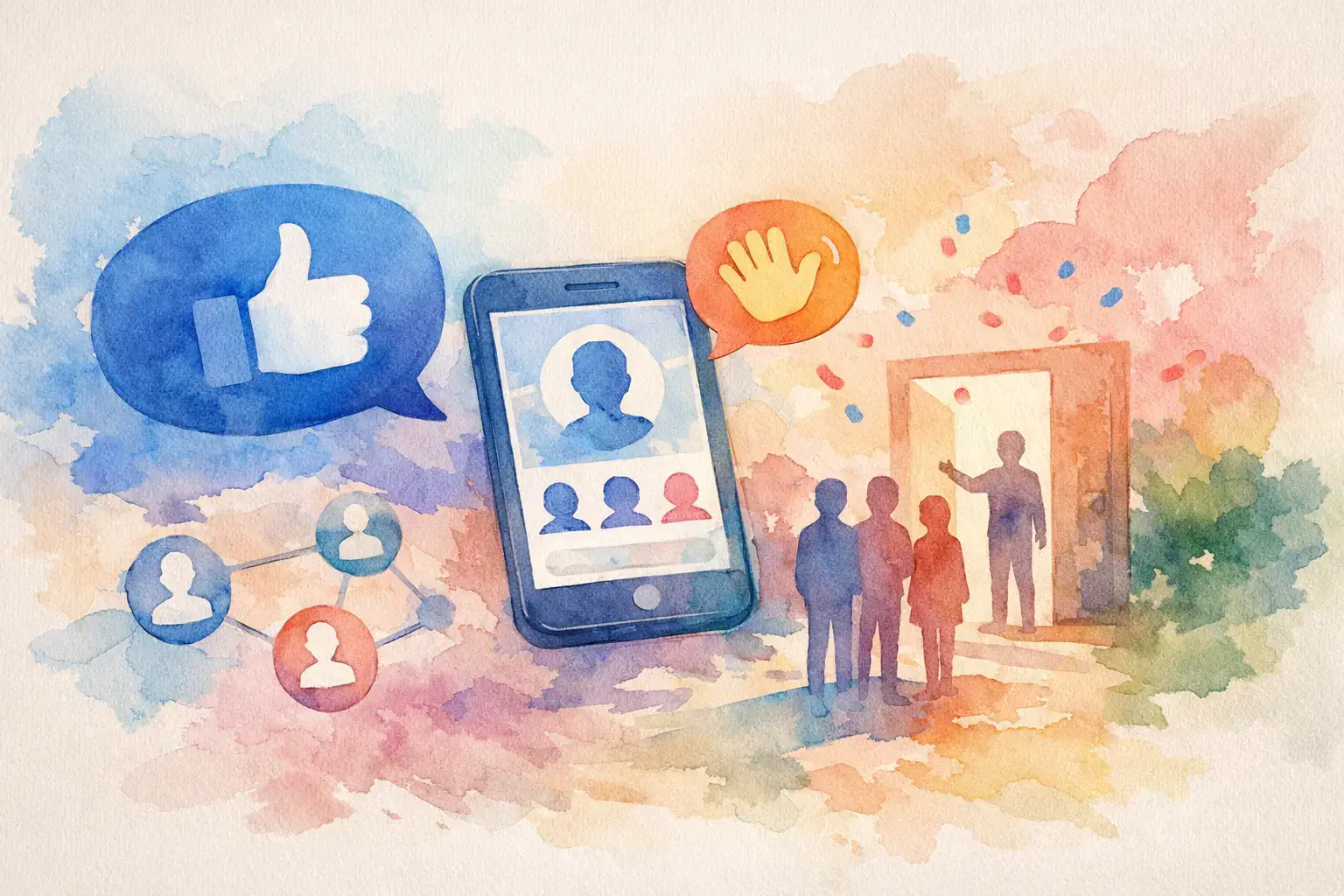
A new member joins, gets approved, and hears nothing – or worse, gets hit with a vague, generic note that sounds copied and ignored. A facebook group automatic welcome message fixes that fast. It gives every new member a clear next step, sets the tone for your community, and turns passive joins into actual conversations, clicks, and leads.
If you use Facebook Groups for growth, your welcome message is not housekeeping. It is conversion infrastructure. Done right, it filters low-intent members, warms up serious prospects, and reduces the dead weight that kills engagement. Done badly, it becomes another ignored notification sitting next to dozens of others.
Why a facebook group automatic welcome message matters
The first few minutes after someone joins a group are your highest-attention window. That is when interest is fresh. They still remember why they joined. They are deciding whether your group is worth opening again tomorrow.
That is why the welcome message has leverage far beyond its word count. It can reinforce the promise that got them to join, explain what kind of content they will see, and move them toward one simple action. For a coach, that action might be introducing themselves. For a recruiter, it might be sharing role type and location. For a local business, it might be answering a quick question. For an agency or SaaS founder, it might be prompting a conversation around a pain point.
There is also a defensive benefit. Groups often lose momentum because new members do not understand the rules, post low-quality promotions, or disappear after joining. A strong automatic welcome message sets standards early. That cuts moderation friction and makes the group feel more intentional.
What the best welcome messages actually do
Most admins write for politeness. High-performing admins write for response.
A strong message is short, specific, and built around one outcome. Not five. One. If you ask new members to read the rules, introduce themselves, download a freebie, book a call, and check the featured post, you are creating friction, not momentum.
The best-performing welcome messages usually handle three jobs in a few lines. They confirm the member joined the right place, they explain what happens in the group, and they ask for one easy reply. That reply matters because engagement changes behavior. Once a member interacts, even in a small way, they are more likely to return.
This is where many marketers miss the point. A facebook group automatic welcome message is not there to close the sale on contact one. It is there to start a low-resistance interaction that makes the next conversion step easier.
How to write a message that gets replies
Start with relevance, not fluff. If your group helps real estate agents generate listing leads, say that. If your group helps ecommerce sellers get traffic without paid ads, say that. People need immediate confirmation that they joined a room built for them.
Then make the rules feel useful, not bureaucratic. Nobody is excited to read a wall of policy language. But they will pay attention if you frame expectations around outcomes. Instead of saying no spam, say that the group works best when posts are practical, specific, and useful to other members.
After that, ask for one easy response. Keep it simple enough that people can answer in under ten seconds. Ask where they are based, what niche they are in, what result they are chasing, or what their biggest challenge is. Specific prompts outperform open-ended questions because they reduce thinking time.
Tone matters too. A weak message sounds like an automated system notice. A strong one sounds like a sharp admin who knows exactly what members want. That does not mean sounding robotic or overly polished. It means sounding direct.
For example, if you run a lead generation group, saying, “Welcome. Tell us what kind of leads you’re after this month” is stronger than “We are so happy to have you in our community.” One starts a business conversation. The other fills space.
Facebook Group automatic welcome message examples
Here is the structure that works across most growth-focused groups.
Open with a direct welcome tied to the group promise. Follow it with one sentence on what members can expect. Then ask one question that creates an easy reply.
A real estate version could sound like this:
“Welcome to the group. This is where agents share practical strategies for getting more listings and local leads without burning money on weak marketing. Start here – what market are you in, and what is your biggest lead-gen challenge right now?”
A recruiter version could be:
“Glad you’re in. This group is built for recruiters who want better conversations, better candidate flow, and less wasted outreach. Drop your niche and the hardest role you’re trying to fill this month.”
An ecommerce version could be:
“Welcome. This group is for sellers who want more traffic, more conversations, and more sales from organic Facebook activity. What are you selling, and what is slowing growth right now?”
Notice what these do not do. They do not overload the member. They do not sound corporate. They create a direct path into a useful exchange.
Common mistakes that kill performance
The biggest mistake is writing a message that tries to do too much. If it reads like a mini sales page, most people will skip it. New members have not earned enough context yet to care about your entire offer stack.
The second mistake is being too generic. “Welcome to our amazing community” says nothing. It does not explain who the group is for, what value it provides, or what to do next.
The third mistake is choosing a weak CTA. Asking members to “check out everything in the group” is not a real next step. Asking a concrete question is.
Another mistake is forgetting that Facebook behavior changes. Some groups thrive on intros. Others get better results by directing members to a featured post or a recurring discussion thread. It depends on group size, moderation style, and how active the feed already is. If your group gets flooded with low-value introductions, do not force more. Point new members toward the conversation format that produces signal instead of noise.
How this fits into a bigger Facebook Group growth system
A welcome message is not your full strategy. It is one high-leverage piece of the machine.
If you are serious about Facebook Groups as a lead source, think in terms of flow. First, you attract the right members through targeted posting and group activity. Then you convert joins into engagement with a sharp welcome message. After that, you keep momentum with consistent posts, relevant offers, and timely replies.
This is where operational discipline matters. Marketers who scale group-based lead generation are not relying on random bursts of activity. They are organizing groups, scheduling campaigns, rotating content angles, and watching for live opportunities to engage. The welcome message works best when the rest of the system is tight.
That is also why safety matters. More volume creates more risk if your workflow is sloppy. You need pacing, variation, and behavior that does not look artificial. Tools built specifically for Facebook Group execution have an edge here because they are designed around the platform’s real constraints, not generic social posting.
For teams using Facebook Groups across dozens or hundreds of communities, that difference is massive. A polished welcome message can increase response rates, but it cannot rescue a weak process behind it. Better systems create better conversations.
How to improve results over time
Do not set your message once and forget it. Test it like you would any other conversion point.
Change the opening line and watch whether reply rates improve. Swap the question and see if answers get more specific. Tighten the copy if members seem to ignore it. If people reply but never engage again, your follow-up content may be the problem, not the message itself.
You should also pay attention to member quality, not just response quantity. A message that gets lots of shallow replies may look successful while producing no real business value. Sometimes a more focused prompt brings fewer replies but better conversations. That trade-off is worth taking if your goal is leads, not vanity engagement.
For marketers building serious acquisition channels through Facebook Groups, this is the right mindset. Every touchpoint should earn its place. Every automation should support a measurable outcome. Every message should move the relationship forward.
One strong welcome message will not transform a weak group overnight. But it will make every new join more valuable, and that compounds fast when your group growth engine is built to scale. If a new member gives you ten seconds of attention, earn it with clarity, not filler.